If your Meta ads have started to feel invisible, you’re not imagining it. People scroll past polished, studio-shot ads without a second thought, but they stop for something that looks like it came from a friend. That’s exactly why so many brands are leaning on UGC style creatives right now — they don’t look like ads, they look like real life, and that’s precisely what makes people pause mid-scroll and actually pay attention.
In this blog, we’ll break down what UGC style creatives actually are, why they’re outperforming traditional ad formats on Meta, and how you can start creating them even if you don’t have a huge budget or a team of creators on call.
Table of Contents
What Are UGC Style Creatives (And Why They Work)
UGC stands for user-generated content — the raw, unpolished videos and photos people naturally post about products they use. But here’s the twist: you don’t always need actual customers to make this kind of content. UGC style creatives are ads that are styled to look like organic, user-made content, even when they’re produced by a creator you hired or briefed specifically for the campaign.
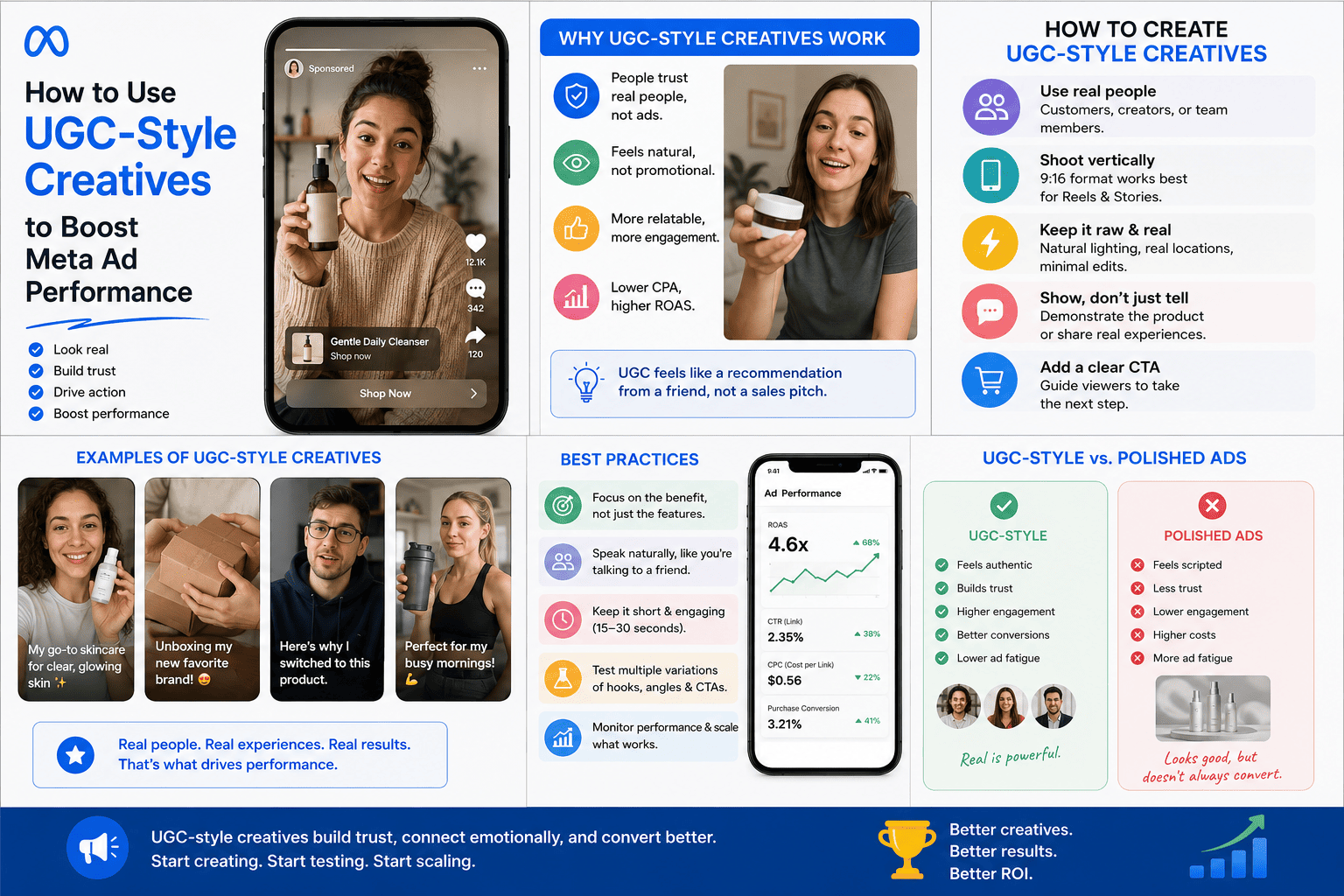
The magic is in the format. A shaky handheld shot, natural lighting, someone talking directly into their phone camera in their kitchen or car — this feels honest. It feels like a recommendation, not a pitch. And on a platform like Meta, where people are scrolling through content from friends and family one second and an ad the next, that authenticity is what earns the scroll-stopping moment brands are chasing.
Why UGC Style Creatives Outperform Polished Ads on Meta
Meta’s algorithm rewards engagement, and engagement follows attention. Traditional ads, with their studio lighting and scripted voiceovers, have started to trigger an almost automatic “skip” response in users who’ve grown ad-blind over the years.
UGC style creatives bypass that mental filter. They blend into the feed instead of interrupting it. A few reasons this format consistently drives better results:
- They build trust faster. People believe other people more than they believe brands.
- They feel native to the platform. Reels and Stories were built for this kind of casual, in-the-moment content.
- They lower production costs. No expensive studio setup, no elaborate storyboarding.
- They give you more creative volume. You can test far more variations, faster.
When brands run these creatives alongside traditional polished ads, the difference in click-through rate and cost per result is often noticeable within the first few days of testing.
How to Create UGC Style Creatives That Convert
Making UGC style creatives isn’t about lowering your standards — it’s about shifting your approach. Here’s how to do it well.
Start With a Real Problem, Not a Product Pitch
The strongest UGC-style creatives don’t open with “check out this product.” They open with a relatable struggle — a skin issue, a messy morning routine, a shopping regret. The product becomes the solution that shows up naturally in the story, not the star of a sales pitch shoved in your face.
Film Like a Person, Not a Brand
This is where a lot of brands accidentally overproduce and lose the effect. Ditch the tripod for a handheld feel. Use natural light instead of ring lights. Let the creator stumble a little on their words. Perfection actually works against you here, because it signals “ad” instead of “friend.”
Write Hooks That Stop the Scroll
The first two seconds decide whether someone keeps watching or swipes away. Strong hooks for this format sound like: “I wasn’t going to post this but…” or “Okay, I need to talk about this.” These feel personal, not promotional, and that’s the whole point of UGC-style creatives — they need to earn attention the same way a friend’s story would.
Test Multiple UGC-Style Creatives at Once
One creative, no matter how good, won’t carry a campaign for long. Meta rewards accounts that consistently feed fresh creative into the system, so batch-produce several UGC-style creatives — different creators, different hooks, different angles — and let the data tell you which ones actually earn the lower cost per result.
Where to Find Creators for UGC-Style Creatives
You don’t need a celebrity influencer for this. In fact, smaller, relatable creators often perform better because they feel more like “someone I know.” A few solid places to source talent:
- Creator marketplaces built specifically for UGC content
- Micro-influencers in your niche with modest but engaged followings
- Your own existing customers, incentivized with free product or a small fee
- Freelance platforms where creators specialize in short-form video ads
Give them a loose brief, not a rigid script. The more freedom they have, the more natural — and effective — the final content will feel.
Common Mistakes to Avoid
Even well-intentioned brands trip up when they first try this format. Watch out for these:
- Over-scripting the creator. It kills the authenticity instantly.
- Using UGC-style creatives without a clear hook. No hook, no watch time.
- Ignoring captions and text overlays. Most people watch with the sound off.
- Never refreshing creative. Even great ads fatigue after a couple of weeks.
Final Thoughts
Meta’s feed is crowded, fast, and unforgiving to anything that feels like a traditional ad. That’s the exact gap UGC-style creatives fill — they slow the scroll, build trust in seconds, and give your campaigns a human face instead of a corporate one. Start small, test often, and let the format do what it does best: make your ad feel like it was never an ad at all.