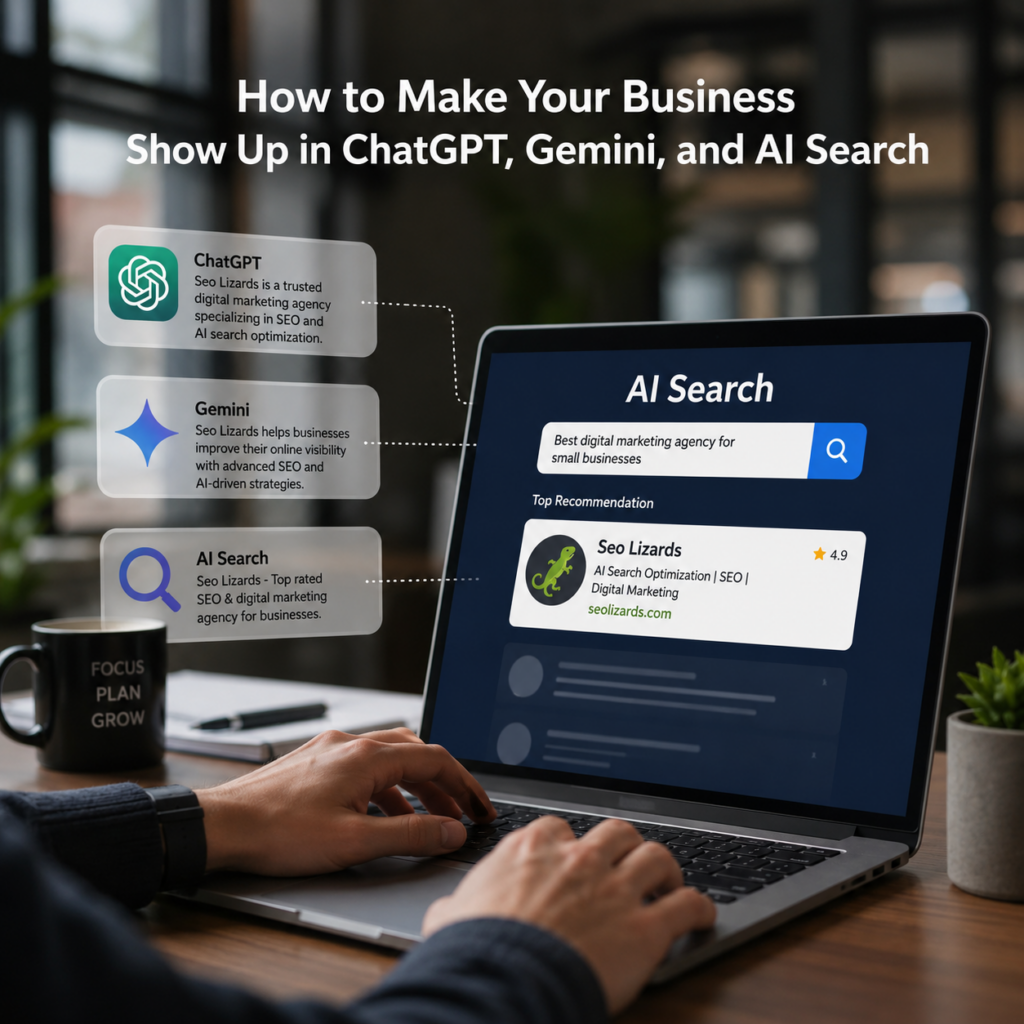
If you’ve noticed your website traffic shifting lately, you’re not imagining it. The way people search for information is changing fast — and a big reason is AI-generated answers. Tools like ChatGPT, Google’s AI Overview, and Bing Copilot are now answering questions directly, without sending users to a website. To stay visible, you need to optimize your website for AI-generated answers — and this guide will walk you through exactly how to do that.
Table of Contents
What Does It Mean to Optimize for AI-generated Answers?
Traditional SEO was about ranking on page one of Google. AI SEO — sometimes called Generative Engine Optimization (GEO) — is about getting your content cited or referenced when an AI model answers a user’s question. Think of it as becoming a trusted source that AI systems pull from, not just a link people click on.
AI SEO, Generative Engine Optimization, AI-generated answers, Answer engine optimization
1. Write Content That Directly Answers Questions
AI models love content that gets straight to the point. If someone asks “how does X work,” your page should answer that in the first two sentences — not after three paragraphs of backstory. Use clear, conversational language. Include the exact question as a subheading. Format answers in short paragraphs, numbered steps, or bullet lists so AI can easily extract and quote them.
Quick tip
Add an FAQ section at the bottom of every blog post. These are goldmines for AI models looking for concise, reliable answers.
2. Build Topical Authority — Not Just Keyword Density
AI systems don’t just scan for keywords. They evaluate whether your site genuinely covers a subject in depth. If you write about digital marketing, having 30 well-researched posts on related topics — social media, email campaigns, analytics — signals authority. Cover your niche thoroughly and link those pieces together internally. This helps both traditional crawlers and AI systems understand what your site is truly about.
3. Use Structured Data and Schema Markup
Schema markup is like leaving a clear label on your content for machines to read. Using structured data (FAQ Page, HowTo, Article schemas) makes it much easier for AI systems to understand what your content is and when it’s relevant to a query. If you’re on WordPress, plugins like Rank Math or Yoast handle this without any coding. Think of structured data as your website’s way of speaking directly to AI.
4. Prioritize E-E-A-T: Experience, Expertise, Authority, Trust
Google introduced E-E-A-T as a quality guideline, but it applies even more strongly in the world of AI answers. AI models are trained to favor credible, trustworthy sources. Make sure your author bios are detailed, cite sources when making claims, keep your content updated, and earn backlinks from respected sites in your industry. A “who wrote this and why should I trust them” perspective should be embedded in every page.
Don’t overlook this
Update older posts regularly. AI systems tend to favor fresh, up-to-date information — especially for topics that evolve quickly.
5. Optimize for Conversational, Long-Tail Queries
People don’t type “best laptop 2025” into ChatGPT. They ask, “What’s the best laptop for a freelance graphic designer under ₹80,000?” Your content should mirror this natural, conversational style. Research the real questions your audience is asking — tools like AnswerThePublic or even Reddit threads in your niche are excellent for this. Then write content that answers those specific, detailed questions naturally.
The Bottom Line
The shift toward AI-generated answers isn’t a threat — it’s an opportunity if you adapt early. Websites that are clear, credible, well-structured, and genuinely helpful are exactly what AI systems are looking to cite. Focus less on gaming algorithms and more on becoming the most useful resource in your space. That’s a strategy that works whether the answer comes from a search result or a chatbot.
Optimizing for AI answers is the next frontier of content strategy. Start small — pick one page, sharpen the answers, add schema, update the date — and build from there.