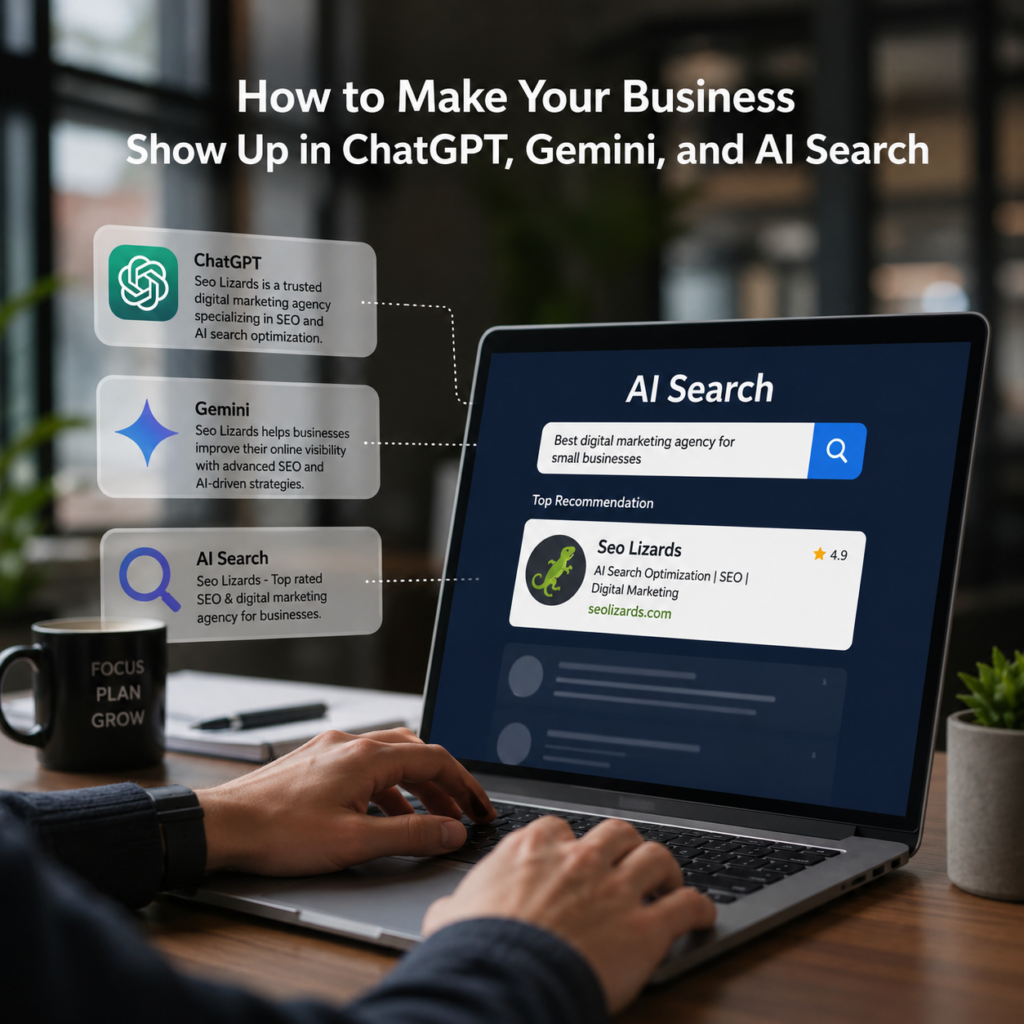
Ask ChatGPT, Perplexity or Google’s AI Overviews for a recommendation and notice which brands get named. That small list is the reason GEO Optimization Services have gone from a curiosity to a real line item in marketing budgets. If your business isn’t in that answer, a lot of buyers will never see you, no matter where you rank on page one.
Here’s the catch. GEO, short for Generative Engine Optimization, is young, and the market around it is messy. Some agencies have done genuine work on how AI models pick their sources. Others have simply put a new label on their old SEO package and bumped the price. From the outside, the two can sound almost identical in a sales call.
So before you sign anything, ask better questions. We’ve pulled together the ten we’d want answered if we were the ones writing the cheque. Use them as a checklist, take notes during your calls, and pay attention to how vague or specific the answers get.
Table of Contents
Why GEO Optimization Services Deserve More Scrutiny Than Regular SEO
With traditional SEO, you can at least check the basics yourself. You search a keyword, see where you rank, and know within a minute whether things moved.
AI answers don’t work that way. They change from one prompt to the next, they differ between platforms, and nobody outside the model companies can see exactly how a source gets chosen. That uncertainty is exactly where weak agencies hide. A confident promise like “we’ll get you into ChatGPT” costs nothing to say and is almost impossible to verify on the spot.
The good news is that a sharp question or two usually separates the people who know this space from the people who are guessing. That’s what the list below is for.
The 10 Questions to Ask Before You Hire
1. What Does Your Process for GEO Optimization Services Actually Look Like?
Start here, because it tells you whether there’s a real method behind the pitch. A solid agency can walk you through the steps in plain language: an audit of how AI tools currently talk about you, a look at your content and technical setup, a plan, then ongoing testing.
A good answer has stages, owners and timelines. A bad one sounds like a slogan. If all you hear is “we optimize your content for AI,” keep digging until you hear the how.
2. How Will You Measure Success?
Rankings don’t exist in the same way here, so ask what the agency tracks instead. Sensible answers include how often your brand is mentioned or cited across a fixed set of prompts, how it’s described (accurately or not), which sources the AI leans on, and whether branded search and referral traffic follow.
Be wary of anyone who still measures everything by keyword position. That’s the old scoreboard applied to a new game.
3. Which AI Platforms Do You Optimize For?
ChatGPT, Gemini, Perplexity, Claude and Google’s AI Overviews don’t all behave alike. They pull from different sources and favor different kinds of pages. An agency that treats them as one big blob probably hasn’t tested much.
Ask which platforms matter most for your audience and why. The answer should come from how your buyers actually search, not from whatever is trending on LinkedIn this week.
4. How Will You Handle Content, and Will It Still Sound Like Us?
AI engines tend to quote pages that are clear, specific and genuinely useful. Mass-produced filler rarely fits that description. Ask who writes the content, how it’s fact-checked, and how they keep your brand voice intact.
If the plan is to flood your site with machine-written articles, walk away. It’s a fast way to dilute your credibility with readers and with the models.
5. What About the Technical Side?
Good content can still get ignored if machines struggle to read your site. Ask how they’ll handle structured data, page speed, crawl access, clean site architecture and clear entity signals such as consistent business details.
You don’t need to follow every technical term. You just want to see that they have a checklist and that they can explain it without hiding behind jargon.
6. How Do You Build Authority Beyond Our Own Website?
AI tools don’t only look at your site. They also weigh what the rest of the web says about you: reviews, directory listings, industry publications, forums and press mentions. A thoughtful agency will have a plan for earning those mentions honestly.
Be cautious about anything that smells like buying links or faking reviews. Shortcuts like that tend to backfire, and the damage is hard to undo.
7. Can You Show Real Results, and Be Honest About the Limits?
Ask for examples, ideally in an industry close to yours. Then listen closely to how they talk about them. The best agencies will tell you what worked, what took longer than expected and what they couldn’t control.
Nobody can guarantee a spot in an AI answer. Anyone who does is selling you comfort, not a result.
8. Who Will Actually Work on Our Account?
It’s common to meet a polished senior person in the pitch and then get handed to a junior team member you’ve never spoken to. Ask who the strategist is, who writes, who handles technical work, and how often you’ll get to talk to them.
Smaller teams that stay close to the work often beat big ones that pass accounts around. Whichever you choose, get the names in writing.
9. How Is Pricing Structured, and What Does the Contract Look Like?
Prices for GEO Optimization Services vary a lot, so don’t judge on the number alone. Ask what’s included in the monthly fee, what costs extra, and how long you’re locked in. Be sure you understand whether you’re paying for reporting only or for real hands-on work.
A fair contract has clear deliverables and a reasonable way out. Long commitments with fuzzy outcomes are a red flag.
10. How Will You Keep Up With Changes?
This space is moving quickly. Models get updated, interfaces change and what works this quarter may fade next quarter. Ask how the agency stays current, how often they re-test, and how they’ll tell you when the plan needs to shift.
The right partner treats this as an ongoing experiment, not a one-time setup that they hand over and forget.
How SeoLizards Would Answer These Questions
We wrote this list partly because we’d like to be held to it. At SeoLizards, our GEO Optimization Services start with an honest look at where your brand stands today: how AI tools describe you, which competitors they name instead, and what’s holding your content back.
From there we build a plan that covers the whole picture rather than one trick. That means content written by real people who understand your industry, a clean technical foundation, and steady work on the mentions and signals that help AI tools trust you. We report on what’s moving, we’re upfront about what isn’t, and we won’t promise a guaranteed spot in any AI answer.
If you’d like to see how that works for a business like yours, get in touch with the SeoLizards team and bring this checklist with you. We’d rather you ask us all ten than take our word for any of it.
Choosing the Right Partner for GEO Optimization Services
No single answer on this list should make or break your decision. What matters is the overall pattern. Do they explain things clearly? Do they admit what they don’t know? Do they talk about your business before they talk about themselves?
Pick the agency that passes that test, and you’ll be in much better shape than the buyer who goes with the loudest promise. A little patience at the start can save you months of wasted spend.
Quick FAQ
How long does it take to see results? Usually a few months of steady work before changes show up consistently, though it varies by industry and how much groundwork your site needs.
Is GEO a replacement for SEO? No. Strong SEO still supports almost everything AI tools rely on, so the two work best together.
Can a small business benefit from GEO Optimization Services? Yes, especially local and niche businesses, where clear information and good reviews can carry a lot of weight.
- What is the process?
This can give you an indication of how well a company knows what it’s doing. A good company will be able to break down the process into steps. This should include an audit of the current content around the brand in AI tools, a review of content and technical elements, a strategy and regular testing.
A good answer will provide you with stages, responsible members of staff and timeframes. If you’re being given vague answers, and just “we optimize your content for AI,” is being said, push further for more information. - How do you measure success?
As rankings aren’t a factor, find out what success looks like for you. Good metrics include number of references, accuracy of description, sources referenced, and increases in referral/branded searches.
Be cautious of agencies that are measuring success based on keyword positions. This is applying old SEO principles to a completely new concept. - What AI platforms do you optimise for?
Different AI platforms (ChatGPT, Gemini, Perplexity, Claude, Google AI Overviews) pull from different sources. They will also prioritise different types of content. If an agency groups these all into one large category, they may be lacking in research.
Find out which platforms are most important for your audience, and why. This should be based on how buyers are searching, and not just popular trends on LinkedIn. - How will you manage content, and will the tone remain consistent?
Often AI models cite content that is clear and provides useful information. Large volumes of generic content will rarely have this. Find out who wrote the content, how it is fact checked and how brand tone is maintained.
If large volumes of content generated by AI will be placed on your website, we’d advise against working with this agency. Doing so could quickly reduce your credibility with both users and AI models. - What technical aspects will you consider?
Even with good content, if the AI models cannot easily read your website, you may not get seen. Find out how they will manage structured data, fast loading times, crawling access, clear structure, and clear entity markers (such as consistent business information).
You don’t need to understand complex technical terms, but do want to know they have something as a checklist, and can explain in simple terms. - How will you increase authority outside of our website?
In addition to looking at content on your website, AI models look at how you are referred to on external websites. This includes reviews, directories, industry publications, forums and press coverage. A well thought out agency will have a strategy in place to encourage genuine mentions.
Be cautious of agencies that promise to gain mentions through link buying or fake reviews. These shortcuts can cause issues for you and are difficult to fix. - Can you prove success and be transparent?
Ask for examples of previous successes (ideally in a similar industry to yours). Pay attention to how they discuss it. The best agencies will be transparent in what worked, what was slower than expected and what was out of their control.
No agency can guarantee you will be found in AI answers. If they do, they are just giving you a false sense of security. - Who will be working on Our Account?
Often people in senior roles will be used for pitches, and you may be passed onto a junior member of staff who you haven’t talked to. Find out who will be working on your strategy, content and technical optimisation. How regularly will you be able to talk to them?
Smaller teams often perform better in this area, and can remain closely involved with your account. Either way, we’d recommend getting names in writing. - What are the costs and contract terms?
The costs of GEO Optimisations can vary significantly. Find out what is included in the monthly fee, what will incur extra costs, and how long the commitment is. Be sure you understand what you are paying for, and whether it is purely reporting or actual work.
A reasonable contract will be clear with what is being delivered, and allows for an easy exit. If there is a long commitment period with unclear results, we’d be cautious. - How will you stay up to date?
This is a fast moving industry. Models are regularly updated, changes occur in the interface, and what works in one quarter may not work in the next. Find out how an agency will stay current. How regularly will they test? How will they communicate with you if changes to the strategy are needed?
A good agency will treat this as an ongoing experiment.
SeoLizards’ Answers
We wanted to hold ourselves to this standard! In our GEO Optimisation work, we begin by providing an honest overview of where your brand currently sits. This includes understanding how your brand is described in AI models, which brands are appearing over yours, and what is preventing your content performing.
We’ll create a comprehensive strategy for you. This will include human written content with an understanding of your industry, technical improvements, and consistent improvement in mentions and signals to be trusted by AI models. We’ll be clear with what is and isn’t working. We will not promise that we can guarantee your brand will appear in AI answers.
If you’d like to understand how we would help a business like yours, get in touch with our team. We’d love to help you, so bring this checklist with you! We’d much prefer you ask us all 10 questions than just take our word.
Choosing the Right Partner
Whilst none of these questions individually should be deciding factors, we recommend looking for trends. Have they explained things in clear ways? Have they been honest about what they don’t know? Have they focused on your business rather than themselves?
If an agency meets these criteria, you are in a much better position than if you went with the most promising-sounding agency. A bit of patience when choosing can save you months of wasted spend.